
Established standards for lighting in the office workplace
Proper lighting is a key factor influencing the productivity, comfort, and health of employees in the office. Too little or too much light can lead to eye strain, headaches, and decreased concentration. Organizing lighting in an office space is a crucial task. Maintaining the lighting system is equally important and is best left to professionals, such as FSR, a company specializing in commercial real estate maintenance and providing approximately 80% of its services through its own staff.
Next, we'll examine established lighting standards for office workspaces and discuss how to ensure compliance with these regulations, ensuring employee comfort while performing their duties.
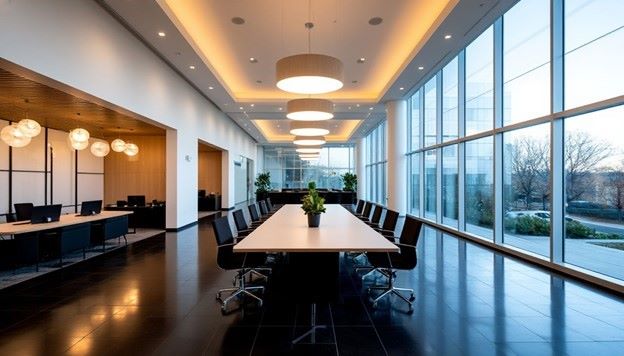
Regulatory Lighting Standards for the Office Workplace
According to legislatively established recommendations and standards, workplace lighting should ensure sufficient visibility for task completion, prevent visual strain, and create a comfortable atmosphere. Specific standards have been developed for various types of spaces, taking into account their purpose and work environment. These standards are typically expressed in lux (lx), a unit of measurement for illuminance. Here are some lighting recommendations for different areas of the office:
- Computer workstations – 300-500 lux, which ensures comfortable visibility for working on a screen and reduces eye fatigue;
- General office area – 300-500 lux, which is the minimum acceptable level for shared workspaces where employees engage in various activities;
- Quiet work and meeting areas – 500-750 lux, especially if there is an abundance of printed materials;
- Executive offices – 500-700 lux, which allows for better concentration on work, especially when making important decisions.
Staircase and corridor lighting standards are 100-300 lux. This is sufficient to ensure safe movement, including in high-traffic areas.
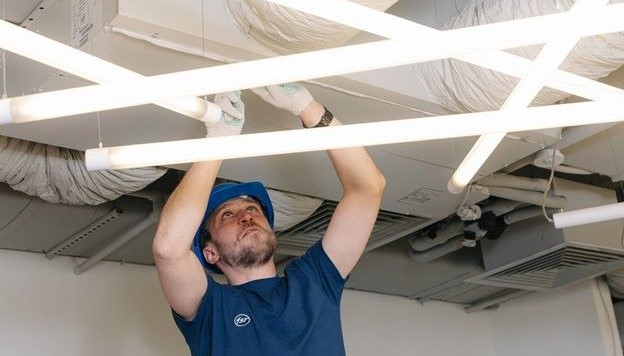
Lighting for Comfort
We've covered office lighting standards according to sanitary regulations. Now let's look at the types of lighting, which also affect comfort levels. Namely:
- Natural light – as much of it as possible should be present in office spaces. For this purpose, installing skylights and mirrors is recommended;
- Artificial light with a color temperature of 4000-6000K, adjustable to suit needs.
Choosing the Right Lighting Level and Types The use of lamps and lighting systems helps improve concentration, reduce fatigue, and enhance the overall well-being of employees. Providing comfortable lighting in the office is an investment in the health and productivity of your staff.